If you grew up listening to pop punk, emo, rock or metal, the idea of spending your wedding reception dancing to chart pop probably isn’t appealing. But the reality of most weddings is that your guest list includes far more than your like-minded friends — and that changes what works on the dance floor.
This guide is for couples who love alternative music but want a reception that actually works for everyone in the room. Those two things are not mutually exclusive. A well-planned alternative wedding playlist doesn’t mean going heavy from the first song to the last. It means starting with music that gets the wider crowd involved, using bridge tracks to ease guests into your world, and saving the heavier or more niche picks for later in the night when the room is ready.
Here you’ll find practical advice on finding and booking the right alternative wedding DJ, structuring your playlist, choosing songs that work across different tastes, handling explicit lyrics and — because it deserves more thought than most couples give it — how to close the night.
What is an alternative wedding DJ?
An alternative wedding DJ is a DJ who specialises in alternative genres — pop punk, emo, rock, nu metal, metal and similar styles — while also understanding the structure and demands of a wedding reception.
That second part is what separates them from a DJ who simply likes alternative music. Playing the right songs is only part of the job. An alternative wedding DJ needs to know how to manage a room where guests span multiple generations and musical tastes, and still deliver a night everyone remembers.
Practical skills to expect:
- Genre knowledge — deep familiarity with alternative music across eras and subgenres, not just the obvious chart hits
- Crowd reading — knowing when the room is ready to go heavier and when to pull back
- Bridging — identifying mainstream-friendly alternative tracks that ease guests from party classics into the alternative set
- Wedding pacing — understanding how to work around formal moments (speeches, first dance, cake cutting) without losing momentum
A generalist DJ can play a few rock songs. An alternative wedding DJ knows how to build a whole night around them.
Why alternative music is increasingly popular at weddings
The generation that grew up with pop punk, emo, nu metal and rock is now getting married. Acts that were filling arenas and topping alternative charts in the early 2000s are now the soundtrack to a whole generation’s teenage years — and those same people are now planning weddings.
That nostalgia is powerful. Songs that felt edgy at the time have become genuine classics, and for many couples, hearing them at a wedding feels just as natural as any traditional choice.
What this shift doesn’t mean, though, is that alternative music needs to dominate the entire night. Most couples still have parents, grandparents and friends with very different tastes on the guest list. Smart planning means working with that mixed crowd rather than ignoring it.
What an alternative wedding DJ actually does on the night
The biggest mistake couples and DJs alike make is assuming that an alternative wedding means playing alternative music for the entire night. Most weddings have a very mixed crowd, and that shapes everything about how the night should be programmed.
A good alternative wedding DJ is constantly reading the room — watching who is on the dance floor, how they’re responding, and adjusting accordingly. Early in the evening, that usually means keeping things accessible: familiar party tracks that get older guests and less alternative-inclined family members involved. As the night progresses and the crowd naturally shifts, the DJ begins introducing bridge tracks and gradually moving into heavier territory.
Beyond music selection, the DJ also handles the practical side of the night: coordinating with venue staff on timings, making announcements, managing volume during speeches, cueing the first dance and — if there’s a live act — setting up before or after them without losing the room’s energy.
Smooth transitions between genres take skill. Going from a party classic to a pop punk track without the dance floor noticing the gear change is exactly what separates an experienced alternative wedding DJ from someone who just has an eclectic Spotify library.
How to choose the right alternative wedding DJ
A conversation before booking tells you a lot. Ask specific questions and listen carefully to how they respond.
Questions worth asking
- Can you give me an example of an alternative wedding you’ve done and how you structured the music? A good answer will mention crowd management and pacing, not just track names.
- How do you transition between mainstream and alternative music without losing the dance floor? They should be able to explain their approach clearly.
- How do you handle explicit lyrics, and can you source clean edits? This matters if children will be present early in the evening.
- What’s your contingency plan if equipment fails?
Red flags to watch for
- They can’t articulate how they read a crowd or adapt in the moment
- They have no experience with mixed-audience events
- They’re dismissive about guest variety (“just tell me what you want played”)
- No backup equipment or contingency planning
A DJ who genuinely understands alternative weddings will welcome these questions rather than give vague reassurances. If you’d like to discuss your wedding with us, get in touch and we’re happy to talk through your ideas.
Guest composition and pacing: why weddings need a different approach
A wedding is not a gig, and the guest mix is the reason why. An alternative party with a predominantly like-minded friendship group can go heavy for most of the night because everyone in the room signed up for that. Weddings are different — you have parents, grandparents, work colleagues and family friends alongside your alternative-music crew, and that range of tastes shapes what works on the dance floor.
Formal moments — the first dance, the cake cut, background music during the meal — need to stay accessible. Alienating half the room before the evening has properly started makes the rest of the night harder to recover.
The practical solution is to treat the night in phases. Keep things broad and inclusive for the first hour or two of dancing, then introduce a dedicated alternative section later in the evening when older guests have typically called it a night. Going heavy at a wedding works best when it’s earned rather than assumed.
Alternative wedding playlist structure: start accessible, bridge, then go heavy late
Gradually getting heavier as the evening progresses works much better than front-loading alternative music. Keeping things accessible early gets the wider wedding crowd involved — and that goodwill carries you through the later, heavier set.
Here’s a playlist structure that works well in practice:
| Time | Phase | Tone |
|---|---|---|
| Arrivals & meal | Background music | Low-key, indie, acoustic |
| 7–8pm | Early evening openers | Accessible party classics, crowd-pleasers |
| 8–9pm | Bridge set | Pop punk crossovers, mainstream alternative |
| 9–10pm | Alternative section | Pop punk, emo, rock — the couple’s core taste |
| 10–11pm | Heavier/late-night set | Metal, nu metal, harder rock |
| End of night | Singalong closer | Anthems everyone knows |
The bridge set is where the alternative wedding playlist really earns its keep. Get the bridging songs right and the heavier section that follows feels like a natural progression rather than a sudden gear change.
Bridging songs: pop punk and mainstream alternative that work at weddings
The best bridging songs are tracks that feel alternative to fans but were mainstream enough to hit the charts — which means nearly everyone in the room recognises them, even if they couldn’t name the genre.
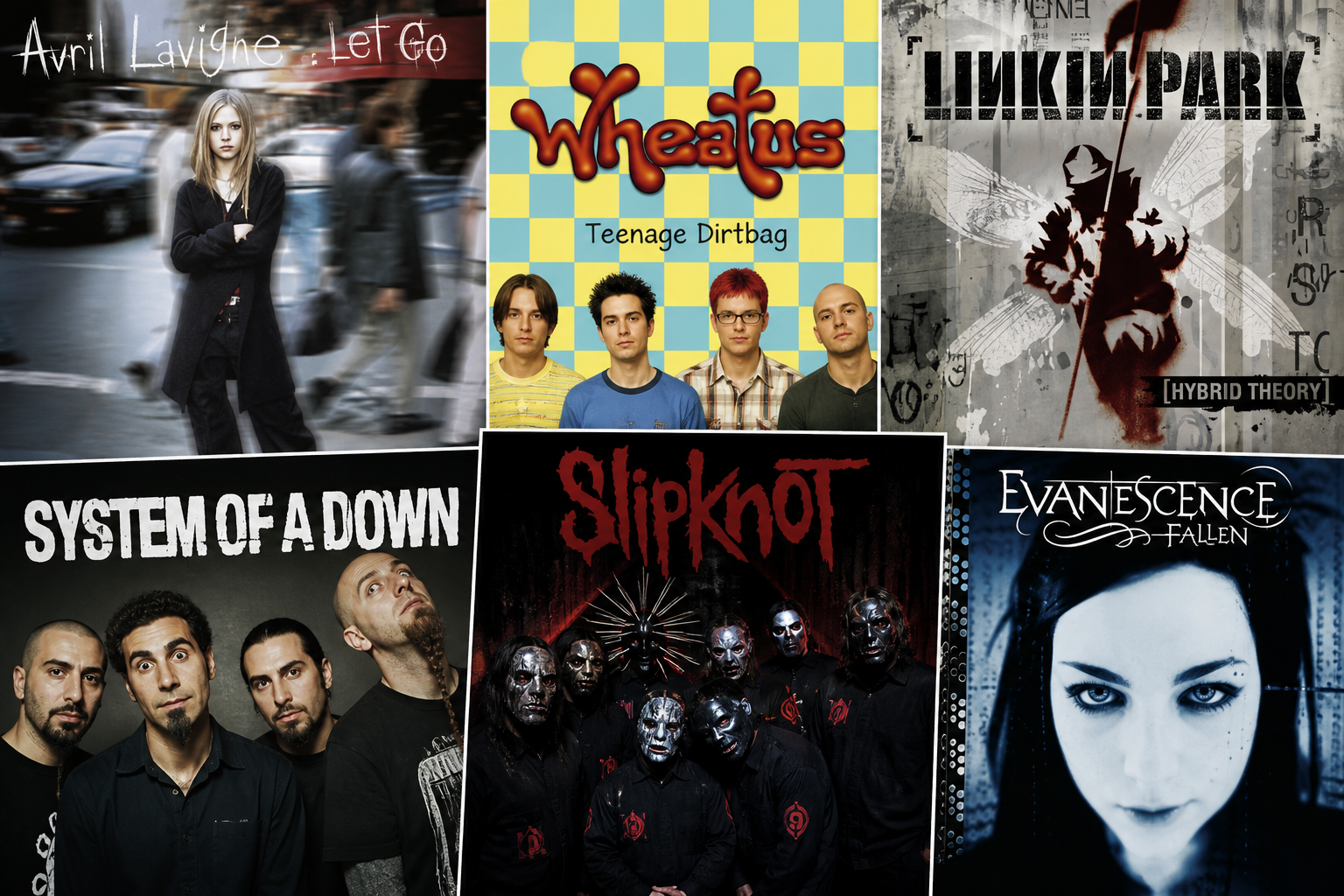
- Wheatus – Teenage Dirtbag — universally singable and immediately nostalgic for almost any crowd
- Avril Lavigne – Sk8er Boi — chart hit with an alternative edge that crosses generational lines
- Blink-182 – All The Small Things — one of the most crowd-friendly pop punk songs in any wedding set
- Green Day – Basket Case — familiar enough to feel anthemic rather than niche
- The Killers – Mr Brightside — arguably the ultimate bridge track; everyone knows every word
- Jimmy Eat World – The Middle — upbeat, positive and accessible without losing its alternative roots
- Sum 41 – Fat Lip — high energy and recognisable from its heavy radio rotation in the early 2000s
For more artist and genre examples, take a look at the full list of styles we cover.
How heavy can you realistically go — and what about explicit lyrics?
Going heavy at a wedding works best when you stick to tracks people actually know. Obscure deep cuts might mean the world to you as a couple, but a room full of mixed guests needs something to hook onto. Artists like Metallica, Nirvana, My Chemical Romance and Rage Against the Machine have enough cultural recognition to land even with people who wouldn’t call themselves metal fans.
Put your heavy favourites on the must-play list and ask your DJ to schedule them later in the night, when the dance floor is fuller and the crowd has naturally self-selected.
Explicit lyrics are a separate consideration. Some of the biggest alternative floor-fillers aren’t family friendly — Rage Against the Machine’s “Killing in the Name” and Limp Bizkit’s “Break Stuff” are obvious examples. Fortunately, these are exactly the kind of tracks that belong later in the evening anyway, by which point younger guests have often gone home.
If children will be present earlier in the night, discuss clean edits with your DJ in advance. Most experienced DJs will have edited versions available, but don’t assume — confirm it during the planning conversation.
Song suggestions: a 10-track alternative wedding must-play template
Use this as a starting point for your must-play list — swap in your own tracks where they fit better. These are suggestions, not a fixed formula.
| Slot | Category | Example |
|---|---|---|
| 1 | First dance | Your choice — can be alternative or classic |
| 2 | Singalong | Don’t Stop Me Now – Queen |
| 3 | Singalong | Mr Brightside – The Killers |
| 4 | Singalong | Livin’ on a Prayer – Bon Jovi |
| 5 | Bridge track | Teenage Dirtbag – Wheatus |
| 6 | Bridge track | Sk8er Boi – Avril Lavigne |
| 7 | Bridge track | All The Small Things – Blink-182 |
| 8 | Late-night heavy | Enter Sandman – Metallica |
| 9 | Late-night heavy | Smells Like Teen Spirit – Nirvana |
| 10 | Late-night heavy | Welcome to the Black Parade – My Chemical Romance |
For the heavy anthems, stick to tracks with name recognition — they land far better than deeper cuts with a mixed crowd. Browse our genre examples for more ideas across different alternative styles.
How to close the night: alternative last song ideas
Your last song sets the final memory of the night, so it’s worth choosing something that actually means something to you. You don’t have to close with “Wonderwall” or “My Way.”
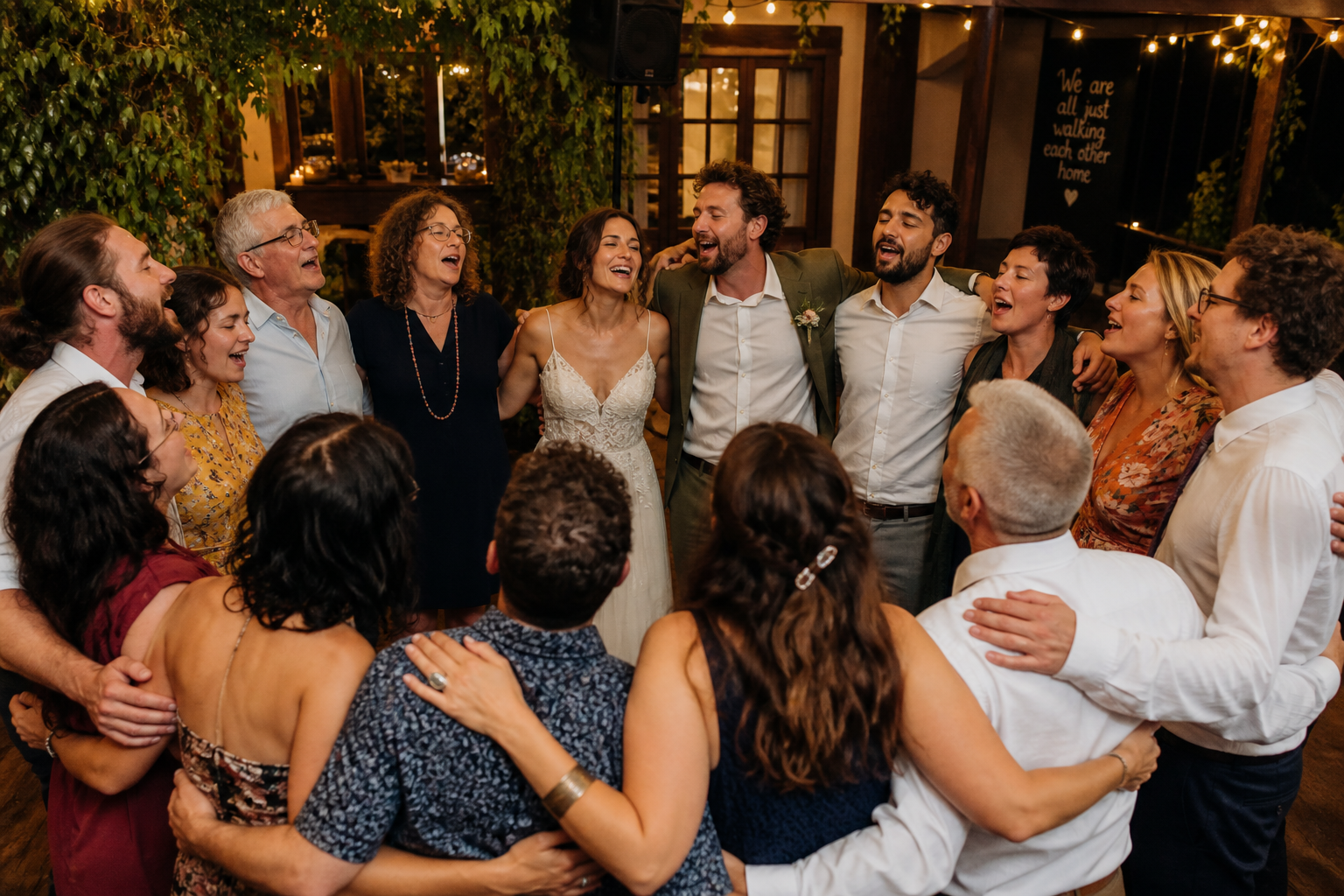
Here are eight end-of-night songs alternative couples regularly choose, and why they work:
- Welcome to the Black Parade – My Chemical Romance — enormous anthem; everyone sings the opening piano riff
- Tribute – Tenacious D — funny, high-energy and genuinely unexpected; the crowd always reacts
- Bohemian Rhapsody – Queen — timeless singalong that crosses every taste boundary
- Don’t Look Back in Anger – Oasis — emotional, familiar and built for a crowd singalong
- All Star – Smash Mouth — nostalgic and self-aware; works brilliantly as a fun closer
- Closing Time – Semisonic — lyrically perfect for an end-of-night moment
- Good Riddance (Time of Your Life) – Green Day — emotional and anthemic without being heavy
- Livin’ on a Prayer – Bon Jovi — reliable, roof-raising and never fails
Prioritise singability above everything else. A song everyone can shout together sends people home buzzing.
Weddings versus alternative birthday parties and gigs
The difference comes down to the guest list. At an alternative birthday party or private gig, the crowd is usually a single friendship group with broadly shared taste — which means you can go heavy or niche for most of the night without losing anyone.
Weddings are different. The guest list typically spans generations and social groups: close friends who know every MCR lyric alongside grandparents, colleagues and distant relatives who don’t. That breadth demands more flexibility, at least for part of the evening.
If going heavy is a priority, the practical answer is a dedicated alternative section rather than planning the whole night around it. Lock in an hour or ninety minutes late in the evening for the music you really want, and use the earlier part of the night to bring the wider room with you.
Logistics: communicating your playlist and preferences to your alternative wedding DJ
The cleaner your briefing, the better the night runs. Send your DJ the following before the wedding:
- Wedding music run sheet — list key moments with approximate times (arrival, first dance, speeches, cake cut, last song)
- Must-play list — around 10 prioritised tracks, labelled so the DJ knows which are non-negotiable
- Do-not-play list — anything that would genuinely ruin the mood for you
- Venue rules — curfew, volume restrictions, any limitations on genres or explicit content
- Genre notes — a brief description of your taste and how heavy or alternative you want each section
It helps to prioritise your must-plays rather than just listing them — it makes placement and transitions far easier to plan.
Confirm final details two to four weeks before the wedding, and ask about backup equipment and set-up time while you’re at it.
Start by building your 10-song must-play list, then contact us to talk through pacing, placement and priorities. It’s your wedding — the songs that matter to you should be there. A good alternative wedding DJ will make sure they land at exactly the right moment.