Your wedding soundtrack matters more than most couples realise. A playlist of generic chart hits and overplayed reception staples might fill a dance floor for a few songs, but it rarely leaves guests talking about the night for years to come. If music genuinely defines you as a couple, it deserves more than a template.
That’s where hiring an experienced indie wedding DJ makes a real difference. Rather than defaulting to the usual crowd-pleasers, a specialist DJ builds a bespoke soundtrack around your actual tastes — the bands, albums and eras that have soundtracked your relationship.
The challenge is that “indie” covers an enormous amount of musical ground. One couple might mean Bombay Bicycle Club and The Maccabees; another means Franz Ferdinand and The Fratellis. That difference shapes everything about how a DJ approaches a wedding, which is why the conversations you have before the big day are so important.
This guide covers what to discuss with your DJ, how to prepare your playlists, how to balance your indie tastes with your guests’ expectations, and how to plan a first dance that feels genuinely personal. You can also explore our indie DJ service to see how we approach it in practice.
What ‘indie’ means — finding your couple’s definition
Indie is one of the broadest terms in music, which makes it both exciting and slightly tricky to plan around. Before your DJ can start building your soundtrack, it helps to pin down which corner of the indie world you actually live in.
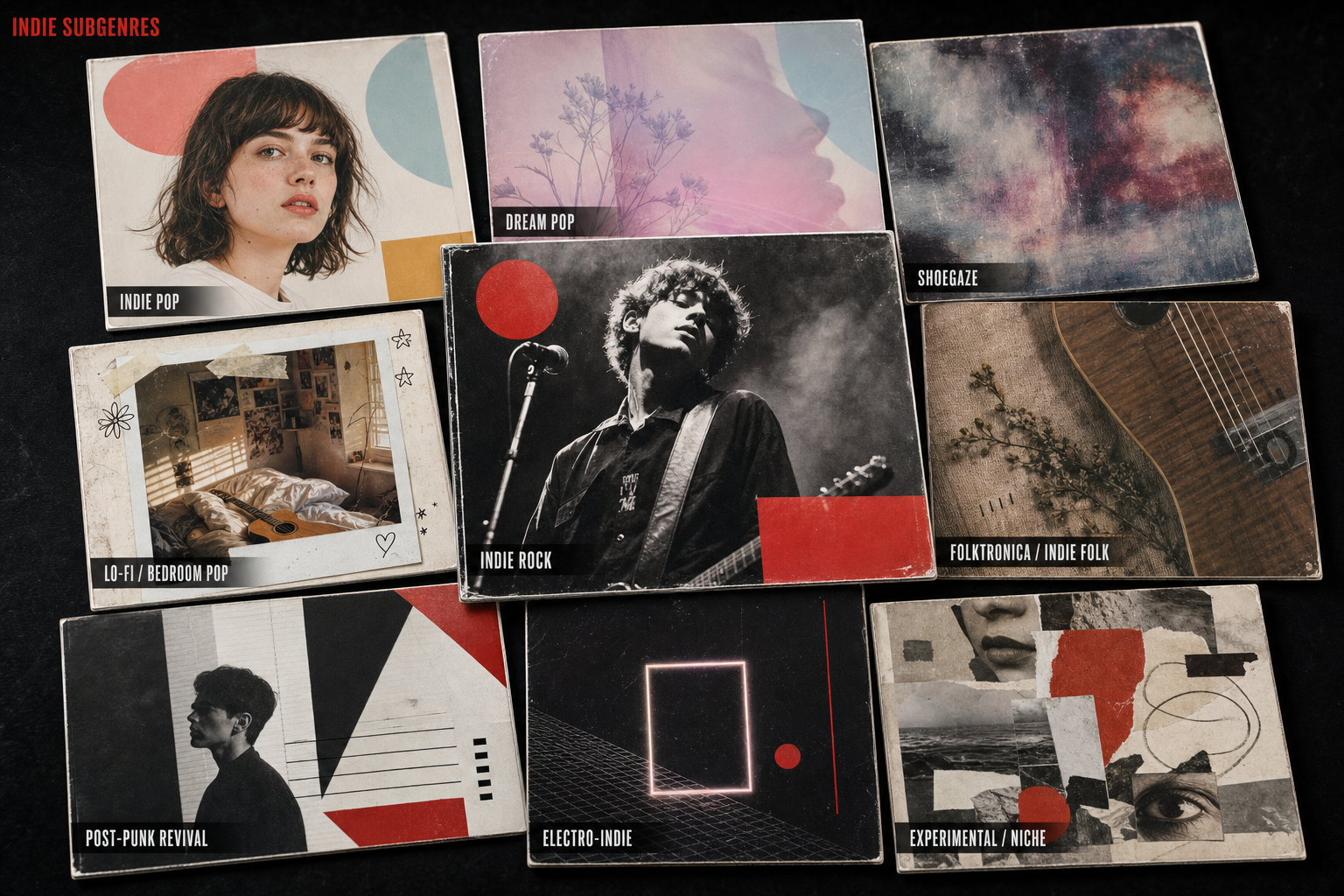
The easiest way is with band names rather than descriptions. Here are some of the main indie flavours to help you identify yours:
- Post-punk revival — angular, guitar-driven and energetic. Think Franz Ferdinand, Interpol, The Strokes, The Libertines.
- Indie rock / Britpop influence — melodic, anthemic and often singalong-ready. Think Oasis, Blur, The Verve, Supergrass.
- Mid-2000s indie dancefloor — uptempo and instantly familiar. Think Arctic Monkeys, The Wombats, The Fratellis, Kaiser Chiefs.
- Indie pop / twee — lighter, more melodic, often with a romantic quality. Think Belle & Sebastian, Camera Obscura, The Shins.
- Alternative / art indie — more textured and considered. Think Radiohead, Arcade Fire, Foals, Bombay Bicycle Club.
Beyond genre, think about energy and era. Do you want a dancefloor that doesn’t stop, or a mix of bangers and slower moments? Are you drawn to the guitar-heavy sound of the early 2000s or something more synth-influenced from the 2010s?
The most useful thing you can do before your planning call is share a playlist. Drop your favourite tracks into Spotify or Apple Music and send it across. That single document tells your DJ more about your taste than any amount of describing it in words.
Starting the music conversation with your indie wedding DJ
What to prepare before your consultation
The more specific you can be going in, the better the result. Here’s what to have ready before your music consultation:
- Your favourite bands and songs — names, not descriptions
- A do-not-play list — songs or genres you’d hate to hear, no matter how popular
- A streaming playlist of tracks that feel right, plus any playlists from gigs or events you’ve loved
- An example of a “wrong” song — this is surprisingly useful for ruling out whole areas of the music map
- Guest demographics — rough age range, whether the crowd are mostly indie fans or mixed
- Key moments — first dance, any parent dances, walk-in music for the wedding breakfast
Six questions worth asking any DJ before you book
- How do you approach mixing — do you beat-match, or keep it more natural?
- How flexible are you if the dance floor isn’t responding to a particular sound?
- How do you handle guest requests on the night?
- What happens if there’s a technical problem?
- Do you have experience with alternative and indie-led weddings specifically?
- How do you ensure our must-play songs actually get played at the right moments?
A good DJ will have clear, confident answers to all of these. If you’re ready to start that conversation, get in touch and we can talk through your plans.
Two playlists every indie wedding DJ will ask for
We always ask couples to prepare two playlists before the wedding — and it’s one of the most useful things you can do to shape your soundtrack without micromanaging the night.
The must-play list (10–15 songs)
These are the tracks that define you as a couple — songs you’d be gutted to miss. Your DJ treats these as anchor points and builds the set around them, making sure each one lands at the right moment while you’re on the dance floor.
The nice-to-have list (30–60 songs)
This is a broader pool of wedding playlist ideas — tracks you’d love to hear if the energy and timing are right. Your DJ dips into this list freely, using it to read the room and mix naturally rather than following a rigid script.
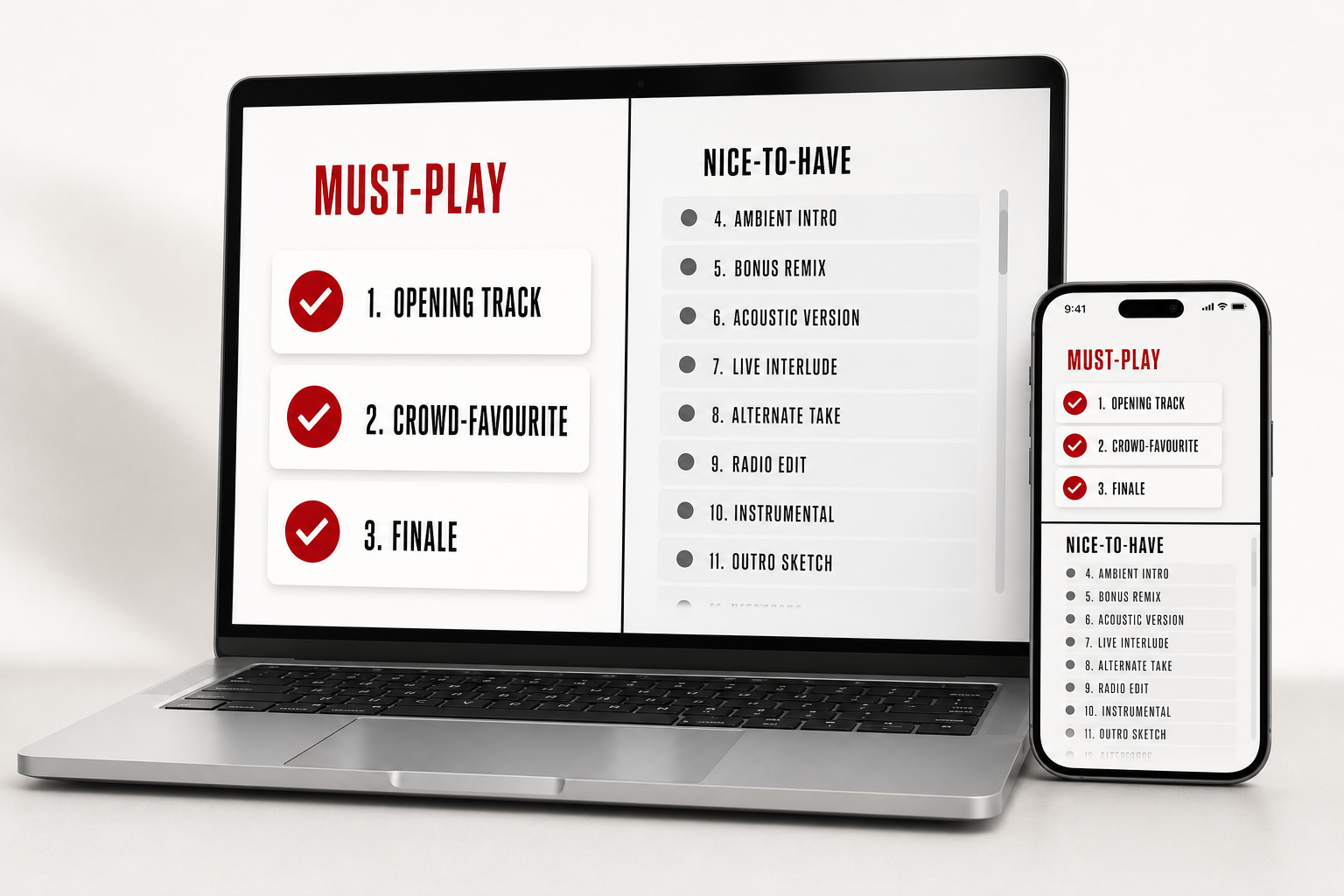
Here’s a simple template you can copy:
Must-play (max 15 songs): tracks with personal significance — songs from early in your relationship, a gig you went to together, or anything that feels like “us”.
Nice-to-have (30–60 songs): a mix of tempos, eras and subgenres from across your indie taste. Include some floor-fillers, some slower moments, and a few left-field choices.
Three tips for building each list:
- For the must-plays, choose songs you’d genuinely be upset not to hear — not songs you just quite like.
- For the nice-to-haves, include variety in tempo and energy so your DJ has options at every point in the night.
- Add a note next to any must-play songs that have a specific meaning — it helps the DJ find the right moment to drop them.
The balance between the two lists is what gives a DJ the freedom to perform rather than just press play. Ready to share yours? Send your playlists and we’ll take it from there.
Why you should trust your DJ to read the room
There’s a meaningful difference between a DJ who plays through a list and a DJ who performs a set. The former ticks boxes; the latter watches the room and makes decisions in real time that keep people dancing.
A good DJ is constantly reading signals: how many people are on the floor, which songs pull people in from the bar, where energy dips after a slow track, how the crowd responds when the set shifts slightly older or younger. Speeches, buffet breaks and the natural rhythm of the evening all affect momentum too, and an experienced DJ adjusts around them without the couple needing to think about it.
That’s the key reassurance here: flexibility doesn’t mean abandoning your preferences. Your must-play songs are non-negotiable anchor points. What a DJ adjusts is the space around them.
If there are specific areas of music you feel strongly about — genres to avoid, a particular era you don’t want straying into — just say so. Any experienced indie wedding DJ will respect those boundaries without question.
Balancing indie tastes with crowd-pleasers
How far you lean into indie depends largely on your guest list. A room full of fellow fans gives you much more freedom; a mixed crowd of family and friends from different musical worlds calls for a more considered approach. Balance doesn’t mean compromise, though. Here’s a three-step strategy that works well for mixed crowds:
Step 1 — Open with familiar ground
Start the evening with universally loved tracks that get people comfortable on the floor, regardless of their taste. Think big Britpop anthems, classic disco, or well-known party tracks that cut across generations.
Step 2 — Move into your indie block
Once the floor is warm and people are committed to the night, lean into your sound. Guests who are already dancing tend to stay dancing.
Step 3 — Blend and bridge later
Use crossover tracks to hold the floor during the transition between indie and mainstream — songs that feel indie to fans but are familiar enough to keep everyone else on board.
The best bridging tracks for mixed crowds include:
- Mr Brightside (The Killers) — universally anthemic, keeps every age group singing
- I Bet You Look Good on the Dancefloor (Arctic Monkeys) — high energy, impossible to ignore
- Take Me Out (Franz Ferdinand) — familiar riff, instant floor response
- Do You Want To (Franz Ferdinand) — slightly less obvious but just as effective
- Chelsea Dagger (The Fratellis) — crowd singalong, works late in the night
Guest requests can also introduce new tracks naturally. A skilled DJ can use a request as a stepping stone back into your preferred sound rather than letting the set drift.
How music shapes the wedding evening timeline
Music isn’t just background noise at a wedding — it’s the invisible hand moving guests from one moment to the next. Mapping your music to the shape of the evening makes everything feel intentional rather than accidental.
Here’s a sample indie wedding timeline you can adapt:
| Time | Stage | Music Style |
|---|---|---|
| 6:00–7:00pm | Arrival & drinks reception | Mellow indie, acoustic, ambient pop — low energy, conversational volume |
| 7:00–8:00pm | Wedding breakfast / dinner | Background indie and alt-pop — recognisable but unobtrusive |
| 8:00–8:15pm | First dance | Your chosen track, introduced cleanly |
| 8:15–9:00pm | Wind-up / post-dinner | Loved-up classics and Britpop — getting guests to their feet |
| 9:00–10:30pm | Main indie dancefloor | Core indie set — your sound, your must-plays, your moment |
| 10:30pm–close | Late-night party | Blend of indie and crossover crowd-pleasers to sustain energy |
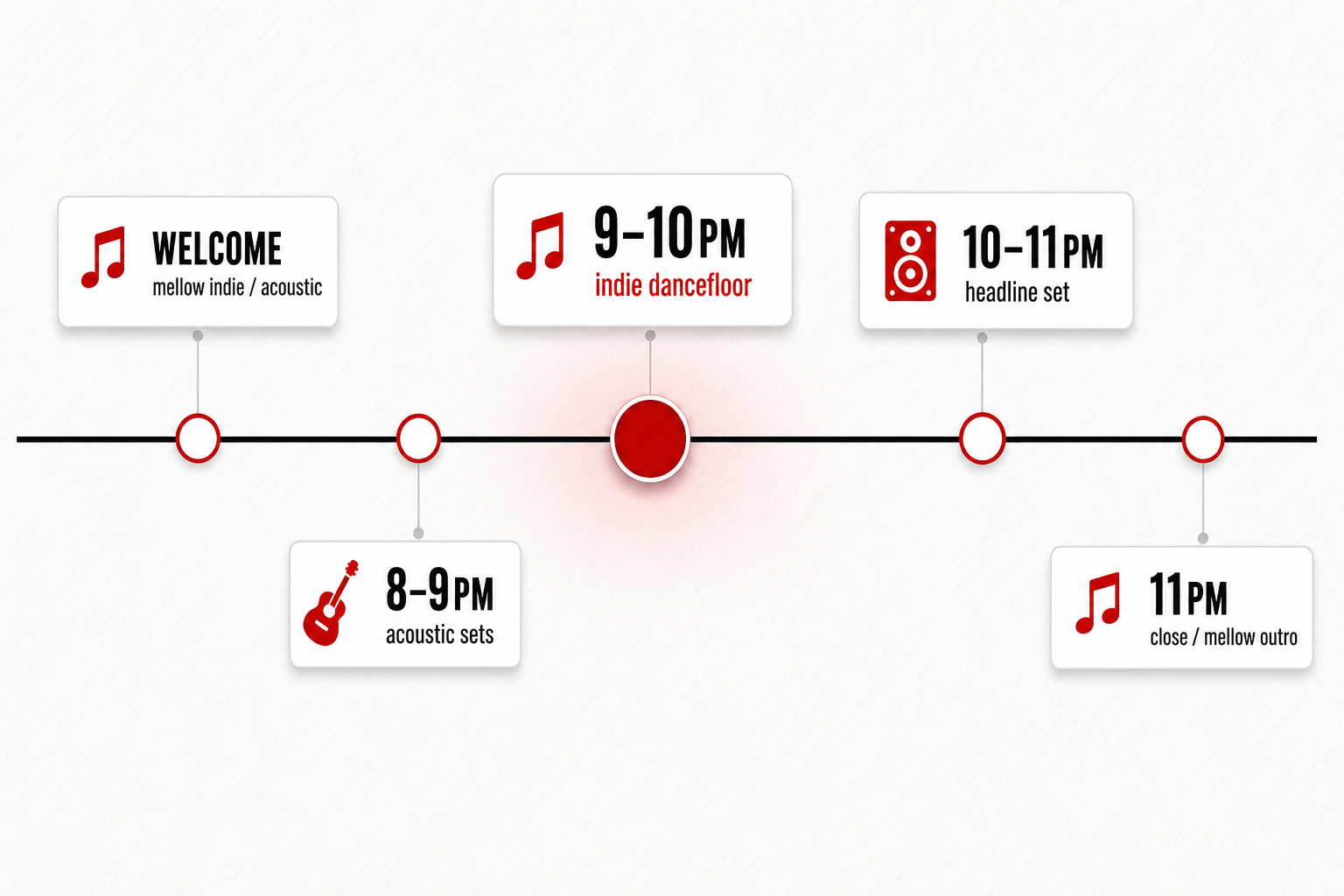
On transitions between stages: use tempo ramps to gradually increase energy from dinner into dancing. Jumping straight from background music to a peak-time banger empties the floor. Bridge moments — such as moving from the first dance into the main set — work well with a short medley or a familiar mid-tempo track that invites people to join in without pressure.
Share this timeline with your DJ at your planning meeting and adjust the time slots to fit your venue’s schedule.
Choosing a first dance that feels personal
Your first dance doesn’t need to be a standard ballad. Booking an indie wedding DJ doesn’t mean every song has to be indie either — the right choice comes down to lyrical meaning, tempo, and the kind of moment you want to create.
Here are some ideas split by mood:
Romantic / intimate
- Toothpaste Kisses — The Maccabees
- You Are the Best Thing — Ray LaMontagne
- Heartbeats — José González
Upbeat / celebratory
- This Must Be the Place — Talking Heads
- Sweet Disposition — The Temper Trap
Unique / unexpected
- Naive — The Kooks
- Lisztomania — Phoenix
- Do I Wanna Know? — Arctic Monkeys (a slowed version works beautifully)
Couples have also created medleys — two songs edited together — to capture different moods in one moment, or to transition naturally into the main set. A medley built around Naive into something more upbeat, for example, can feel genuinely personal rather than borrowed.
Use the studio recording rather than a live version; live tracks can have unpredictable endings that are hard to cue cleanly. If you’re planning any choreography, test the timing against the actual track length before the day.
Sample indie wedding playlists by vibe
Use these as a starting point for your must-play and nice-to-have lists. Share them with your DJ and adjust to fit your taste.
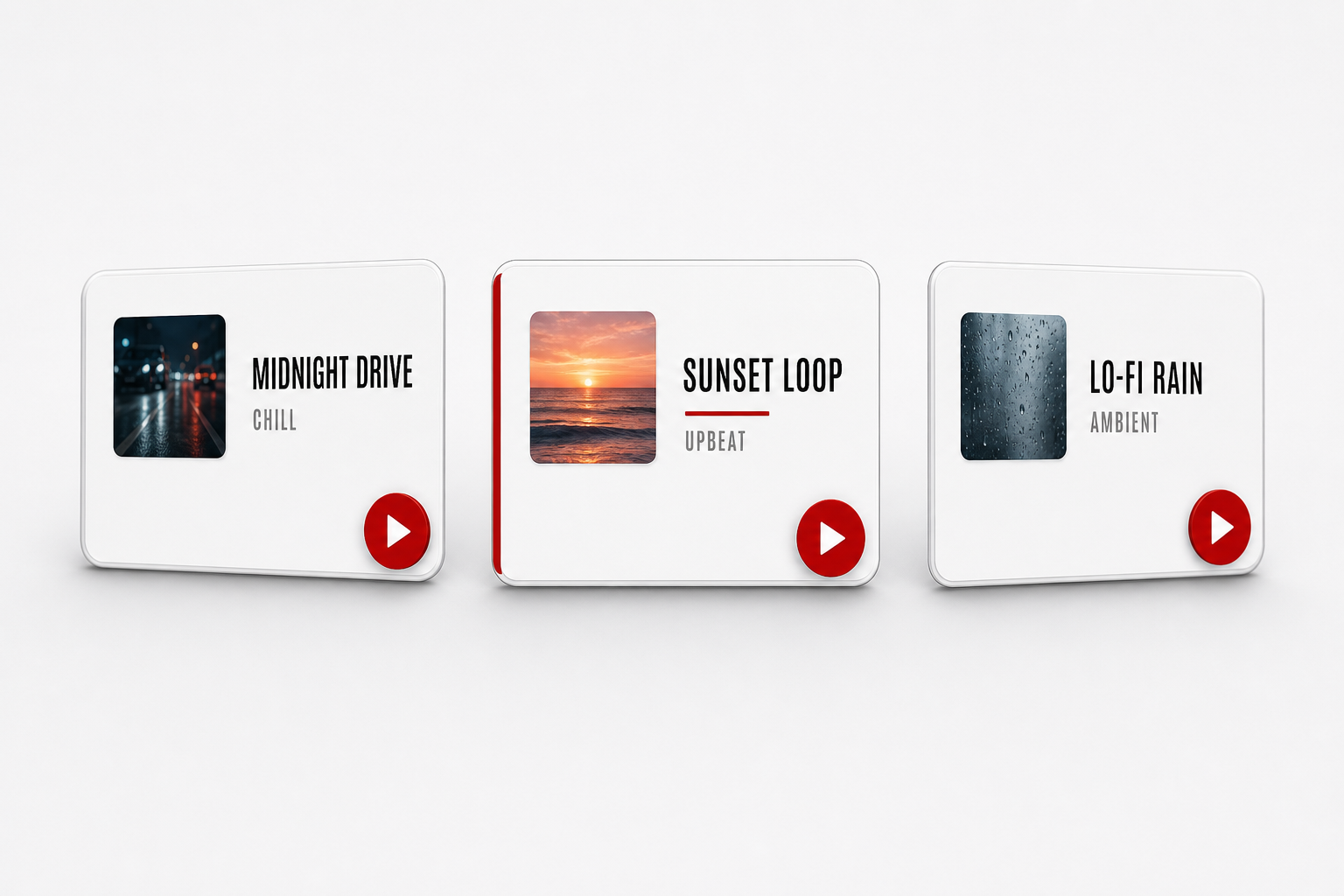
1. Mellow / romantic indie — drinks reception, dinner, background
- Toothpaste Kisses — The Maccabees
- Heartbeats — José González
- This Must Be the Place — Talking Heads
- Lua — Bright Eyes
- The Scientist — Coldplay
- Skinny Love — Bon Iver
- First Day of My Life — Bright Eyes
2. Upbeat indie dancefloor — main set, 9pm onwards
- R U Mine? — Arctic Monkeys
- I Bet You Look Good on the Dancefloor — Arctic Monkeys
- Take Me Out — Franz Ferdinand
- Reptilia — The Strokes
- Naive — The Kooks
- Fluorescent Adolescent — Arctic Monkeys
- Do You Want To — Franz Ferdinand
- Last Nite — The Strokes
- Obstacle 1 — Interpol
3. Crossover / singalong indie — late night, bridging tracks
- Mr Brightside — The Killers
- Chelsea Dagger — The Fratellis
- Dakota — Stereophonics
- Semi-Charmed Life — Third Eye Blind
- Common People — Pulp
- Wonderwall — Oasis
- Don’t Look Back in Anger — Oasis
Medleys work particularly well as transitions — Naive into R U Mine?, for example, keeps the mood connected while shifting the energy upwards.
Sorting the logistics before the day
Getting the practical side sorted early means there’s nothing to think about on the day itself. Send your DJ everything they need at least one to two weeks before the wedding — not the night before.
Pre-wedding logistics checklist
- Arrival and setup time — confirm when the DJ can access the venue and how long setup takes
- Soundcheck schedule — agree a time to test levels before guests arrive
- Venue restrictions — share any noise curfews, volume limits or stage access requirements
- Final playlists — send your must-play list, nice-to-have list and do-not-play list together
- Point of contact on the day — confirm who the DJ speaks to if they need anything (ideally not the couple)
- Requests policy — agree in advance whether guests can make requests and how the DJ handles them
On the contract side, make sure it covers cancellation terms, equipment and power requirements, and what happens if there’s a technical issue on the night.
Any questions about what to prepare? Contact ALT DJ and we’ll walk you through it.
Common questions about booking an indie wedding DJ
Will you play guest requests?
Yes — but with context. We use the couple’s must-play list as anchors and weave in appropriate requests where they fit the flow. Requests that don’t suit the vibe can be politely declined or saved for later.
Can we have a full indie night?
Absolutely, if your guest list supports it. For mixed crowds, a predominantly indie set with crossover tracks tends to work better. Bring this up at your consultation.
How do you handle mixed-age guests?
By blending indie sets with crowd-pleasers and using bridging tracks to keep everyone on the floor. The couple’s taste leads; the set adapts around it.
What if our must-plays clash with the room’s energy?
An experienced DJ will read the floor and time your must-plays for the moments they’ll land best — not just drop them in sequence.
How far in advance should we book?
As early as possible. Popular dates — particularly Saturdays from May to September — can book up 12–18 months ahead.
Do we need to prepare a full playlist?
Not necessarily. A must-play list, a do-not-play list and a general vibe description is usually enough to get started.
Make your wedding soundtrack your own
Planning a wedding soundtrack comes down to a few clear steps: define what indie means to you, build your must-play and do-not-play lists, think about the shape of the evening, and then trust an experienced DJ to bring it all together on the night.
The best weddings reflect the couple’s personalities. When you play the music you genuinely love rather than what you think you’re supposed to play, the whole celebration feels more alive — and more memorable for everyone in the room.
You don’t need to have every track figured out before you reach out. A sense of your vibe and a handful of reference artists is a perfectly good starting point.
See our indie DJ service for examples of what we do, or get in touch to start the conversation about your day.